

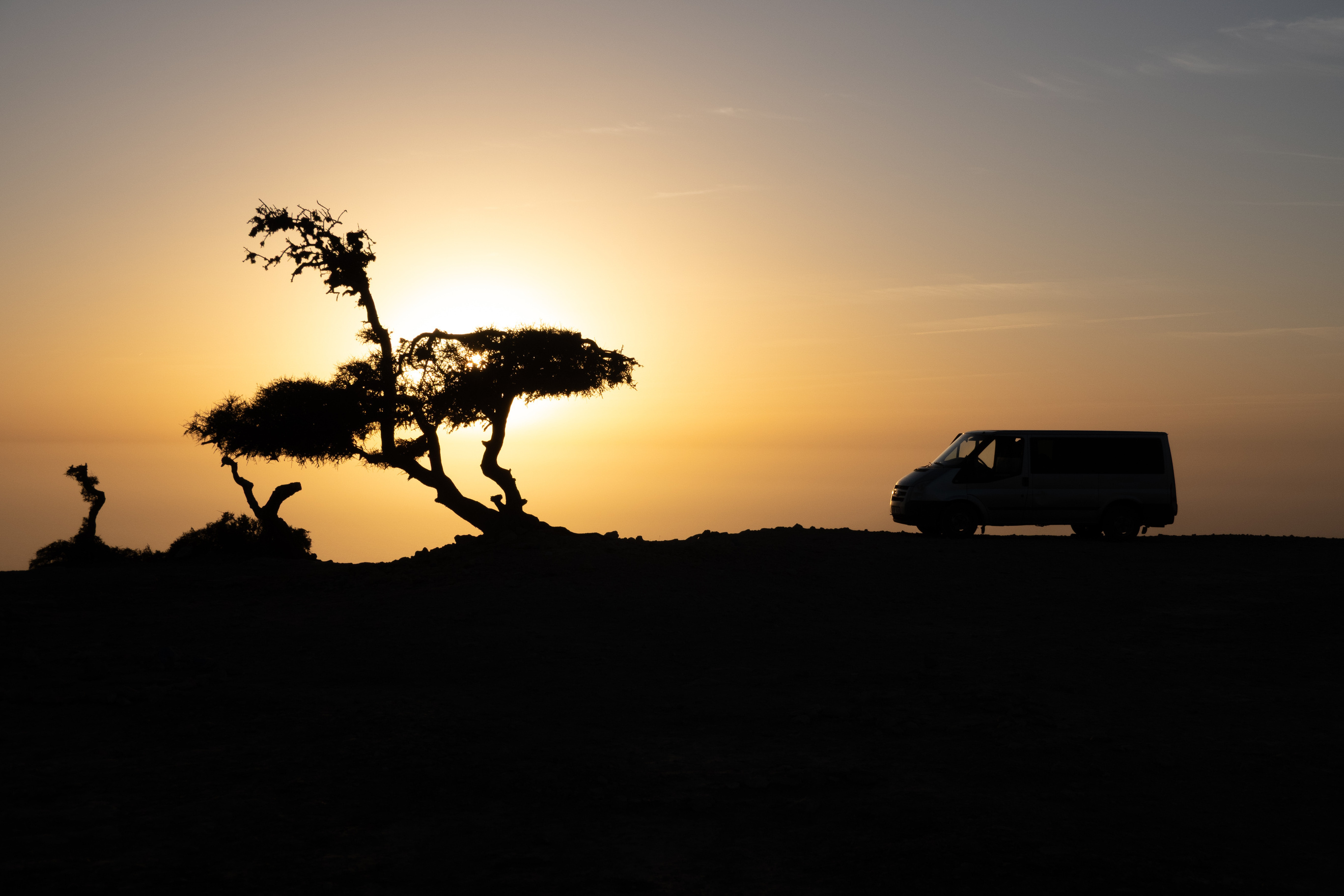
Alice and I agreed that we would go somewhere warm for the whole of November to climb and explore. Europe would have been enough for me, but Alice wanted something more exotic and adventurous, so we chose Morocco, which we had both heard a lot about. We agreed to skip the plane and set off in my old, rusty but beloved van.
Even before the trip, I found out and confirmed on site that people go to Morocco mainly for multi-pitch climbing and not for sport climbing. There are some sport climbing routes there, but nothing worth traveling so far for. There are currently four major climbing areas in Morocco. Three are in the Atlas Mountains: Todra, Tafraoute, Taghia, and the Caiat area in the north of the Rif Mountains is also worth mentioning. Morocco is not a small country, and the distances between these areas are quite large. We planned to visit places other than climbing sites, to try some surfing and paragliding on the coast, so we decided not to go to all the climbing areas at all costs.

At the turn of October and November, we set off from Chamonix towards Algeciras in Spain, from where a ferry departs for Ceuta in North Africa. We sped through Spain with only a stop to sleep, planning to spend a few days here on the way back. After four hours of suffering at the Spanish-Moroccan border, we finally found ourselves in Morocco. Thank God for the Schengen Agreement in Europe! Our Moroccan pilgrimage had finally begun. I admit that my first impressions were a bit mixed. On the one hand, there were surprisingly luxurious roads and highways, and on the other hand, there was trash, plastic, and mess everywhere you looked, and as a spoiled European, I am sensitive to that. Another big experience was driving. Moroccan roads are always busy, and in addition to unpredictable cars, there are lots of pedestrians, goats, and dogs everywhere. Crossing the highway is a common thing, and the shoulders of roads and highways are places for walking and sitting, so you have to be alert all the time, and three times as much at night. We were also surprised by how ubiquitous French is here. Sure, Morocco is a former French colony, but the extent of it simply pleasantly surprised us.
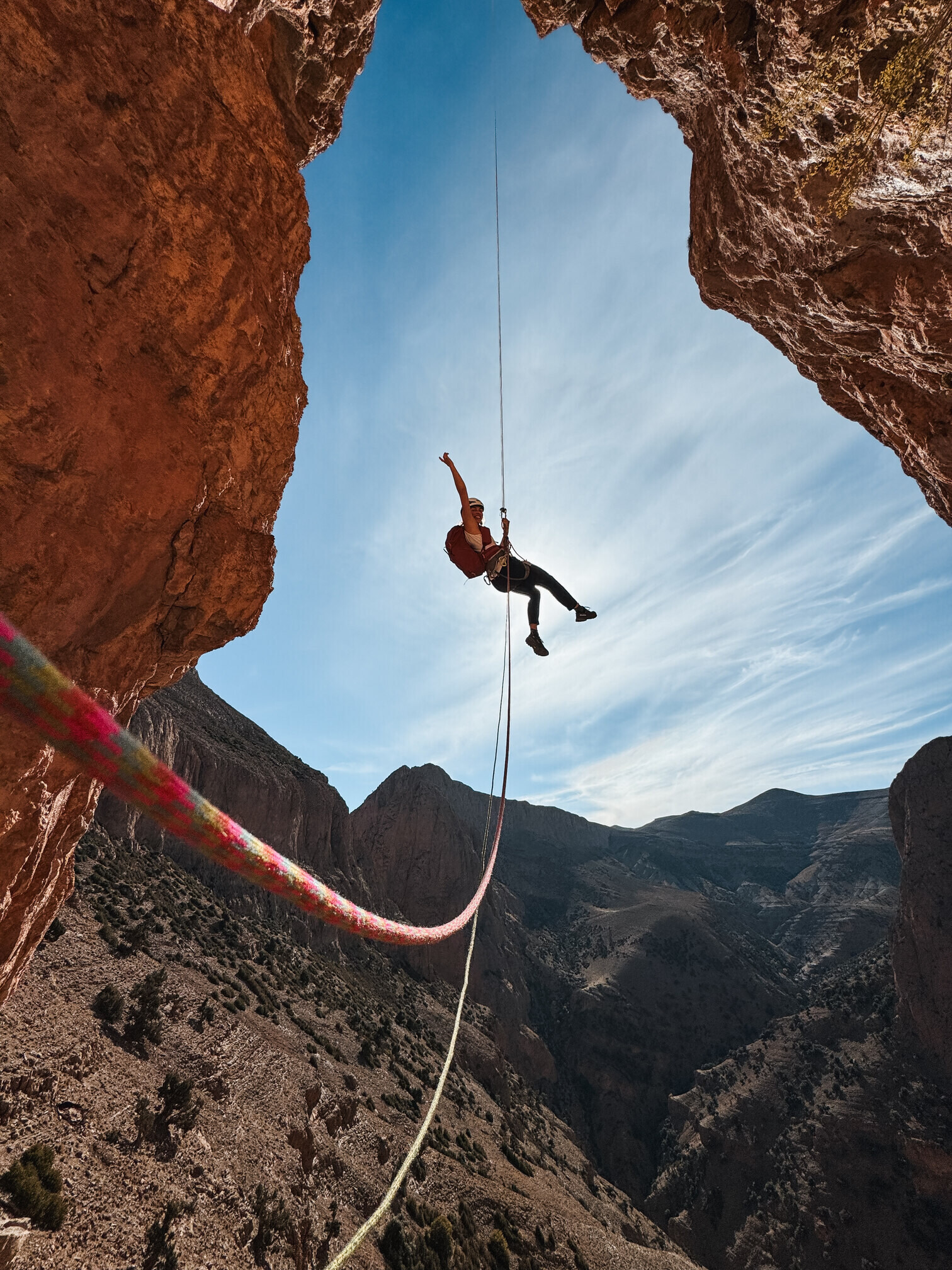
Our first climbing stop was Taghia. On the way there, we made a few stops for food, shopping, and culture in various unknown towns where they are not used to seeing foreigners. The markets in these places were always the best experience. Tents, stalls, hustle and bustle, haggling, lots of great-looking and disgusting-looking food and things. The two of us, blond Europeans, stood out a bit in the crowd of Moroccans, but everyone was always very nice to us, and we generally felt welcome everywhere. Only Alice was often asked if she was here alone and where her husband was.
We drove to Taghia itself by car. A simple dirt road for cars has been built in the last two years; before that, it was necessary to walk two to three hours with luggage on donkeys from the village of Zaouiat Ahansal. Taghia is a small Berber village with about fifty houses and roughly 150 inhabitants in a valley full of steep orange limestone walls and canyons. People have been climbing here for about 50 years, with most routes, especially multi-pitch sport routes, having been established in the last 20 years. There are mainly large steep walls full of more difficult sport or semi-sport routes with difficulties ranging from 6c to 8b and lengths of 300-800 meters. There are few sport-secured routes in the 6a-6b range; the easier routes are more of a personal challenge and often have a wilder mountain character. To climb the best walls here, it is good to be able to climb at least 6c-7a multi-pitch routes.
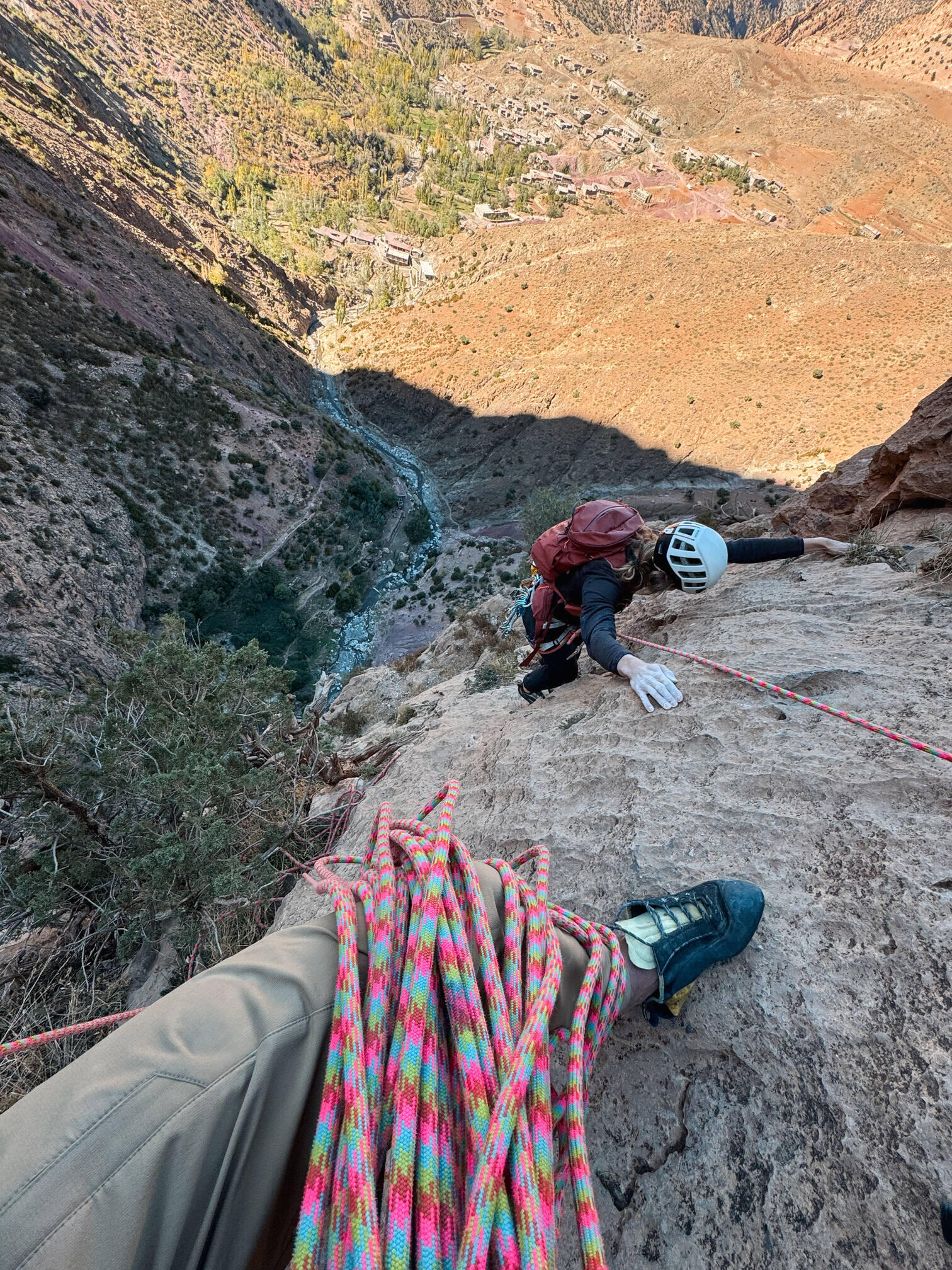
They stay with locals, who have become accustomed to climbers over the years and have often expanded their homes to include accommodation facilities. It can be said that the village is already half-alive from climbing tourism and is growing rapidly as a result. There has been a huge boom in climbers over the last five years. We met dozens of other climbers from all over Europe here, and although Taghia no longer has the same atmosphere of a newly discovered climbing oasis as it did 20-30 years ago, it is still a beautiful place with a relaxed atmosphere, a world unto itself. Alice and I climbed some of the most classic walls here, such as Paroi de Source, Taoujdad, Oujdad, Paroi de Cascade... but there is so much to see and it is so beautiful that we will have to come back for a longer stay. I already have a list of more difficult routes in my head that I want to try next time, because Alice and I only climbed the easier classics on this trip and I didn't have a partner for the bigger stuff. After 9 days of eating the same tagine, we decided to go somewhere else in Morocco to surf.
After another adventurous drive, we found ourselves on the coast of an ocean pulsating with life and tourism, far from the peaceful Atlas Mountains. As complete beginners, we visited two well-known surfing hotspots full of Europeans, Taghazout and Imsouane. The sea and beaches full of people were a big change, but we actually enjoyed it a lot. A different sport, a different landscape, a different culture. After a few days of fairly successful attempts not to drown and to ride the waves, we slowly began to move north along the coast. The coast between Agadir and Safi is beautiful and well worth a visit.
The second climbing stop on our trip was the Rif Mountains with the Caiat-Talembote climbing area. We didn't climb much here in the end because the weather turned bad, but it's definitely worth coming here for some of the more difficult multi-pitch routes. The rock here forms several hundred meters of walls with cracks, stalactites, and holes, making for some very interesting and athletic climbing. After a bit of sport climbing on stalactites in the rain, we took a rest day in the beautiful city of Chefchaouen, famous for its blue color. After another dose of tourism and markets, we decided to shorten our stay in Morocco and escape the wave of bad weather to Spain.

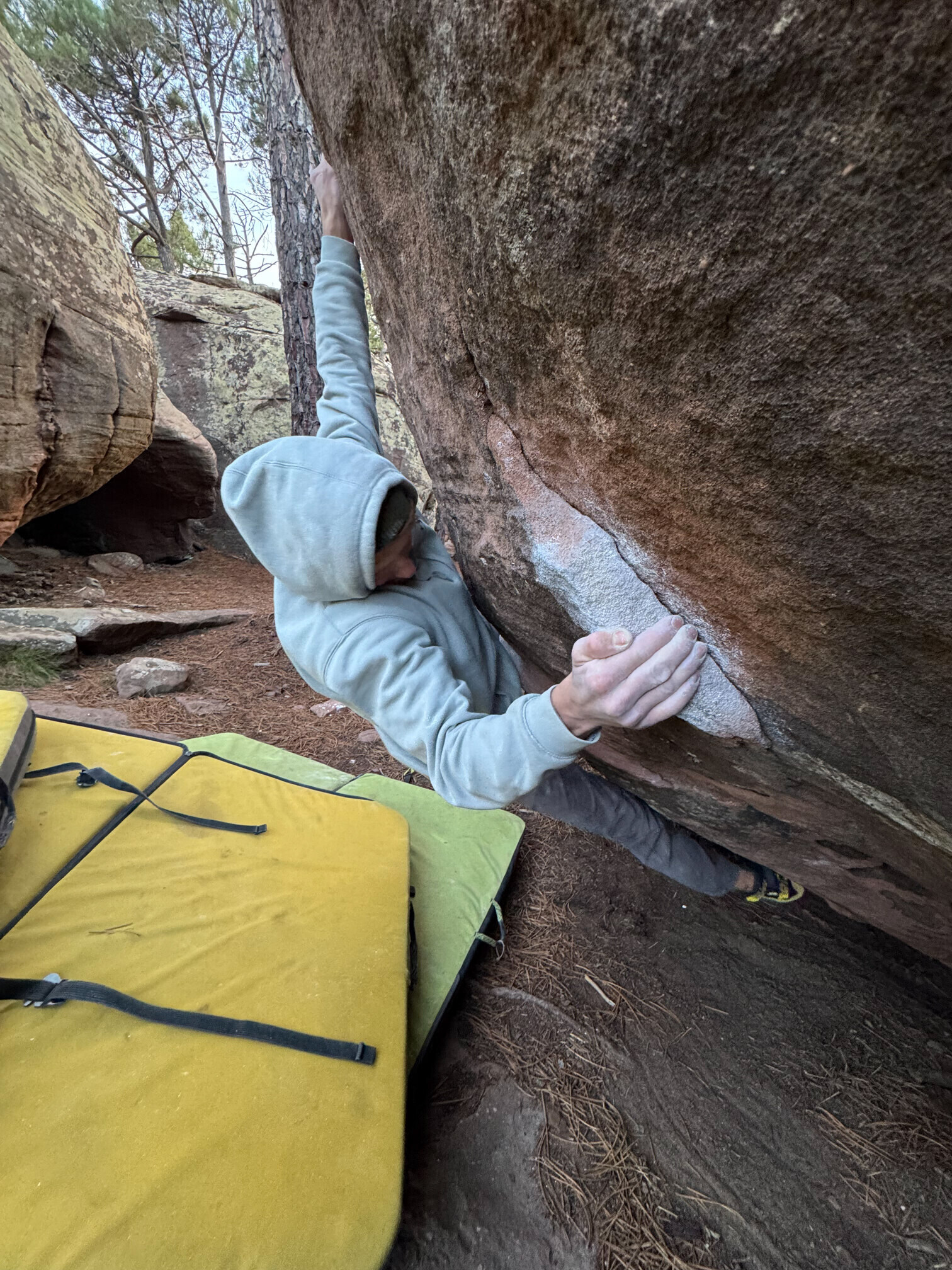
We had one week left of our trip, and I knew right away where I wanted to spend it without any further traveling: in Albarracín! It's a bouldering area well known among boulderers. Pine forests, orange sand, climbing for all levels, and a relaxed atmosphere. I am a terrible boulderer and, unfortunately, I have always been a bit dismissive of bouldering, but now I am enjoying it more and more. With my growing ambitions in rock climbing, I also see it as perfect training for rope climbing. It was another stop in a different landscape, a different sport, a different universe. During the week, we tore the skin on our fingers, rolled around on mattresses, and climbed a few two-meter rocks. Awesome! I recommend it to all mountaineers. And so we were able to go home in peace.
We really enjoyed how the landscape, people, architecture, and even our activities gradually changed during our month-long road trip. We are glad that we chose to explore Morocco and Spain in the form of a road trip. Even though it involved a lot of driving, we saw and experienced so much that we definitely don't regret it.
Photos: Danny Menšík
Comments (0)
There is no comment on this article.
Comments can only be inserted by logged-in user.